

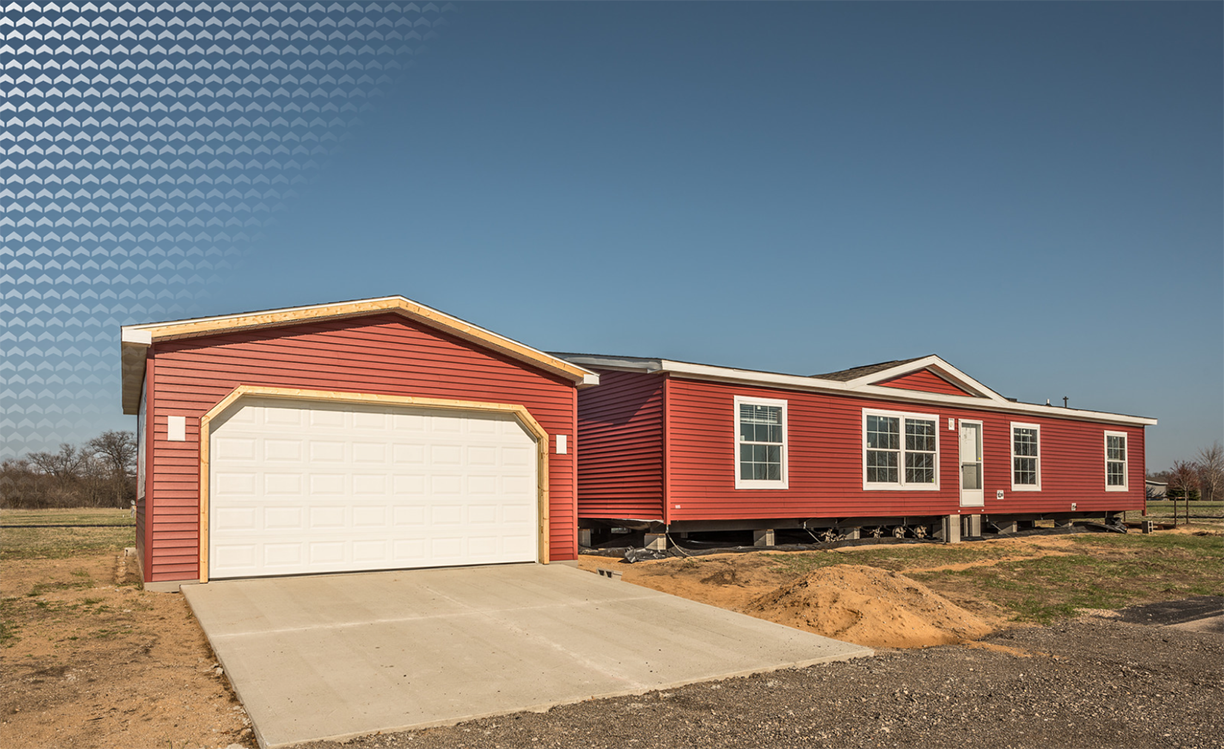
Virginia's New Manufactured Home Zoning Law: A Winchester-Area Guide
Can you put a manufactured home on your land in Frederick County now?
As of July 1, 2026, Virginia law requires local governments to allow manufactured and modular homes anywhere a site-built single-family home is permitted by zoning — with limited exceptions for historic districts. Before this law, most Winchester-area localities restricted manufactured homes to agricultural zoning only. If you own — or are shopping for — a residential-zoned parcel in Frederick, Clarke, or Warren County, this changes what you can legally place on it.
By ERA OakCrest Realty | September 24, 2026
Land buyers in the Winchester area ask a version of this question constantly: is there a lower-cost way to own a home here without leaving the region? For years, the honest answer involved a real catch — Virginia zoning treated manufactured and modular homes as second-class housing, boxed into agricultural districts even in counties where plenty of residential land sat unused for that purpose.
That changed this year.
What actually changed on July 1, 2026
Virginia's new law — passed with near-unanimous, bipartisan support this General Assembly session — does two specific things:
- Manufactured and modular homes can now go in any residential zoning district that already permits site-built, single-family housing, with limited carve-outs for historic districts.
- Localities can no longer apply stricter siting, design, or appearance standards to a manufactured home than they apply to a conventional single-family home in that same zone.
Before this, the Virginia Manufactured and Modular Housing Association describes the old rule bluntly: homes were "for the most part, restricted to agricultural zoning only." That meant a residentially-zoned lot in a Frederick County subdivision or a Stephens City infill parcel simply wasn't an option for this type of housing, no matter how well the home itself was built or how well it fit the neighborhood.
That restriction is gone as a matter of state law. Local zoning ordinances still control the details — setbacks, lot coverage, utility hookups — but they can't single out manufactured housing for tougher treatment anymore.
Why this matters specifically in the Winchester area
Frederick, Clarke, and Warren counties still have a meaningful amount of land zoned residential but historically developed with only site-built homes in mind — outlying parcels around Stephens City and Middletown, land near Front Royal and Strasburg, and smaller lots on the edges of Winchester City itself. Clarke County, with its larger share of open and agriculturally-adjacent land, is likely to see the most direct impact, since much of that land was already the only place manufactured housing was allowed — now it has company.
This lands right in the middle of the affordability conversation that's been driving people toward the Shenandoah Valley from Northern Virginia and the DC metro for the past few years. A 2020 industry cost study found manufactured homes typically run around a third of the cost of a comparable site-built home — a gap that matters a great deal when you're weighing whether to build new, buy resale, or consider a manufactured or modular option on land you already own or are shopping for.
It's also relevant if you're thinking about multigenerational housing — placing a second, smaller home on a larger residential lot for a parent or adult child. This law opens that door in places it was closed before, separate from (and in addition to) Virginia's new accessory dwelling unit mandate that we covered in an earlier post on the state's ADU law — that law governs smaller secondary structures on an already-developed lot, while this one governs where a manufactured or modular home can serve as the primary residence on a parcel.
The financing piece you should know before you get excited
Here's where it gets more complicated, and where talking to a lender matters more than usual.
Zoning access and mortgage access are two separate problems. Research from the Pew Charitable Trusts on manufactured housing financing in Virginia found that from 2018 through 2024, the overwhelming majority of manufactured-home borrowers who owned the land underneath their home were able to get a standard mortgage — but almost none of the borrowers on leased land or in resident-owned cooperatives could. Those buyers were pushed into personal property loans instead, which typically carry meaningfully higher monthly costs than a comparable mortgage.
The practical takeaway: this new zoning law makes it legal to place a manufactured or modular home in more places, but your financing path still depends heavily on whether you own the land outright, whether the home will be titled as real property, and how your specific lender treats that title status. This is exactly the kind of question worth running past a lender before you fall in love with a parcel — the zoning answer and the financing answer aren't automatically the same answer.
What to check before you act on this
If this law has you rethinking a piece of land — whether you already own it or you're shopping — a few things are worth confirming before you move forward:
- Confirm the parcel's current residential zoning designation with the Frederick, Clarke, or Warren County zoning office. The state law sets the floor; local ordinances still control the specifics.
- Ask about setback, lot coverage, and utility requirements for the specific parcel — these still apply and can vary by district.
- Talk to your lender early about whether the home will be titled as real property or personal property, since that decision drives your financing options far more than the zoning change does.
- Check for HOA restrictions, if the parcel sits in a governed community — a homeowners' association can still have its own architectural standards that go beyond what the county requires.
- Compare the total picture against new construction or resale, not just the sticker price of the home itself. Site prep, utility connections, and foundation work all factor into whether this ends up being the lower-cost path for your specific situation.
None of this is a reason to avoid the conversation — it's a reason to have it with someone who knows the local zoning offices and lenders, rather than guessing.
Where this fits in your decision
If you're already leaning toward building or buying in the Winchester area because of the affordability gap compared to Northern Virginia, this law adds a real option to the table that wasn't fully available a year ago. Whether it's the right option for you depends on the parcel, your financing situation, and what you're actually trying to build — a primary residence, a multigenerational setup, or something else.
That's exactly the kind of question worth working through with someone who can look at your specific situation rather than general rules. If you're weighing a land purchase, a manufactured or modular build, or how any of this fits into a move-up plan, reach out to ERA OakCrest Realty and we'll walk through the options with you.
Frequently Asked Questions
Does this law apply to modular homes too, or just manufactured homes?
The law specifically addresses manufactured homes — those built to the federal HUD Code — but the zoning parity principle affects how counties treat factory-built housing more broadly. Ask your local zoning office how they classify modular construction on the specific parcel you're considering, since local ordinances can draw this line differently.
Does this mean I can put a manufactured home anywhere in Winchester City or Frederick County?
No. The home still has to go on a parcel zoned for residential use, and local rules on setbacks, lot size, and utilities still apply. What changed is that counties can no longer single out manufactured homes for stricter treatment than a site-built home would face in that same zone.
Is it easier to get a mortgage on a manufactured home now that zoning has changed?
Not automatically. Zoning eligibility and mortgage eligibility are separate questions. Whether you can get a standard mortgage still depends heavily on land ownership and how the home is titled — that's a conversation to have directly with your lender before you commit to a parcel.
How does this differ from Virginia's new accessory dwelling unit (ADU) law?
The ADU law lets homeowners add a smaller secondary structure to a lot that already has a primary home on it. This manufactured home law is about where a manufactured or modular home can serve as the primary residence on a parcel. They're related affordability tools, but they solve different problems.
Does an HOA still get a say if the county now allows it?
Yes. County zoning sets the legal floor, but a homeowners' association in a governed community can still enforce its own architectural and design standards, which may be more restrictive than the county's baseline rules.
About ERA OakCrest Realty
ERA OakCrest Realty is a local team helping buyers and sellers navigate the Winchester and Northern Shenandoah Valley market, covering Frederick, Clarke, and Warren counties. Whether you're searching for your first home, upgrading to new construction, exploring luxury or investment properties, or getting ready to sell, the team walks you through pricing, paperwork, and negotiations with a straight talk, no surprises approach. Ready to talk through your specific situation? Reach out to ERA OakCrest Realty today.

Terms Of Use | Privacy Policy | Accessibility Statement | Fair Housing Notice
126 North Kent Street, Winchester, VA 22601 | 1018 Jefferson Ave, Charles Town, WV 25414
Suzette Neff, Broker

© 2024 MoxiWorks
©2022 ERA Franchise Systems LLC. All Rights Reserved. ERA Franchise Systems LLC fully supports the principles of the Fair Housing Act and the Equal Opportunity Act. Each ERA Office is Independently Owned and Operated. ERA and the ERA logo are service marks of ERA Franchise Systems LLC.
